

Timp de decenii, Georgia a reprezentat principala poartă de acces a Armeniei către piețele internaționale și Marea Neagră, însă normalizarea relațiilor cu Azerbaidjanul și Turcia ar putea schimba treptat această dependență. Redeschiderea frontierelor și proiecte precum restaurarea căii ferate Gyumri–Kars sau TRIPP ar putea oferi Armeniei noi rute comerciale, costuri de transport mai reduse și o mai mare flexibilitate economică. În același timp, dezvoltarea portului Anaklia și consolidarea infrastructurii maritime georgiene mențin Georgia într-o poziție importantă în conectivitatea regională.
Miza nu este neapărat înlocuirea unui partener cu altul, ci diversificarea rutelor comerciale ale Armeniei. Poate procesul de pace din Caucazul de Sud să transforme Georgia dintr-un partener indispensabil într-unul dintre mai mulți parteneri strategici ai Armeniei?
Articol publicat în cadrul programului „The Black Sea Desk: Writing the Region into Europe”, organizat de Freedom House/Presshub, împreună cu The Black Sea Trust for Regional Cooperation, din cadrul German Marshall Fund.
Programul reunește participanți din România, Georgia și Armenia într-o redacție virtuală în care se lucrează la articole dedicate unor teme precum integrarea europeană, securitatea regională, geopolitica Mării Negre, combaterea dezinformării și evoluțiile din vecinătatea estică a Uniunii Europene.
Sargis Asatryan
Armenia’s Black Sea Bet: Will Peace with Azerbaijan Make Georgia Less Important?
For a landlocked country surrounded by closed borders, access to international markets has always been more than an economic concern for Armenia. It is a question of connectivity, transport costs and economic security.
For decades, Georgia has served as Armenia’s main northern gateway to international trade, connecting the country to the Black Sea through its ports, particularly Poti. But as Armenia moves towards normalising relations with Azerbaijan and Türkiye, this long-standing dependence could gradually change.
According to political scientist Gor Petrosyan, around 30–35% of Armenia’s foreign trade turnover has been transported through Georgian territory over the past three decades. He argues that this dependence creates practical challenges for Armenian businesses, particularly during winter, when road closures at Georgian border crossings can disrupt deliveries. Transit tariffs are another concern, sometimes creating additional costs for exporters and importers.
Georgia’s importance is not limited to existing roads and railways. Its Black Sea ports provide Armenia with access to maritime transport and wider international markets.
The port of Poti remains an established part of this route, while the planned deep-sea port of Anaklia could further strengthen Georgia’s position. Construction at Anaklia is now underway, with the first phase expected to be completed in 2029 and an annual capacity of at least 600,000 TEUs. Georgia’s Ministry of Economy says the project is intended to increase the country’s capacity to handle international cargo.
However, the regional transport map may be entering a new phase.
The reopening of the Armenian-Turkish border could provide an alternative route for Armenian goods, potentially reducing transit time and costs for certain destinations. One of the most significant projects is the restoration of the Gyumri–Kars railway.
In April 2026, Armenia and Türkiye held a joint working group meeting in Kars to discuss the rehabilitation and operation of the railway. According to Armenpress Armenian Prime Minister Nikol Pashinyan later said that technical assessments were still underway and that it was too early to announce a reopening date. He also noted that the infrastructure had not been properly maintained for approximately four decades.
The possibility of reopening the border is also becoming more tangible from an infrastructure perspective. Armenia has completed the renovation of the Margara checkpoint, preparing it to handle passengers and cargo. Nevertheless, the border remains closed to regular traffic, and no official opening date has been announced.
The peace process with Azerbaijan could create further opportunities. The August 2025 Washington declaration reaffirmed the importance of opening regional communications and introduced the Trump Route for International Peace and Prosperity (TRIPP), intended to connect mainland Azerbaijan with Nakhichevan through Armenian territory while also creating reciprocal connectivity opportunities for Armenia. In November 2026, Armenia, Azerbaijan and the United States launched trilateral technical planning groups focused on transport and electricity infrastructure. This represents progress, although it does not mean that all regional routes are already operational.
Petrosyan, however, cautions against treating regional reopening as an immediate solution to Armenia’s transport problems. He distinguishes TRIPP from the broader process of regional unblocking and stresses that the practical benefits will depend on infrastructure, tariffs, logistics companies and the types of goods being transported. Railways, for example, may be suitable for some cargo but less efficient for products requiring faster delivery.
He considers the restoration of communication with Türkiye, particularly the Gyumri–Kars railway, among the more realistic alternatives in the foreseeable future. At the same time, he does not expect the opening of routes with Azerbaijan to transform regional trade immediately.
Ultimately, Armenia’s objective should not be to replace dependence on Georgia with dependence on another neighbour. Georgia’s established ports, transport networks and access to the Black Sea will remain valuable even if new routes become available.
The real opportunity lies in diversification: more routes, greater competition and lower transportation costs. Peace could redraw Armenia’s trade map, but it will not make geography irrelevant. It may instead give Armenia something it has lacked for decades: a choice.
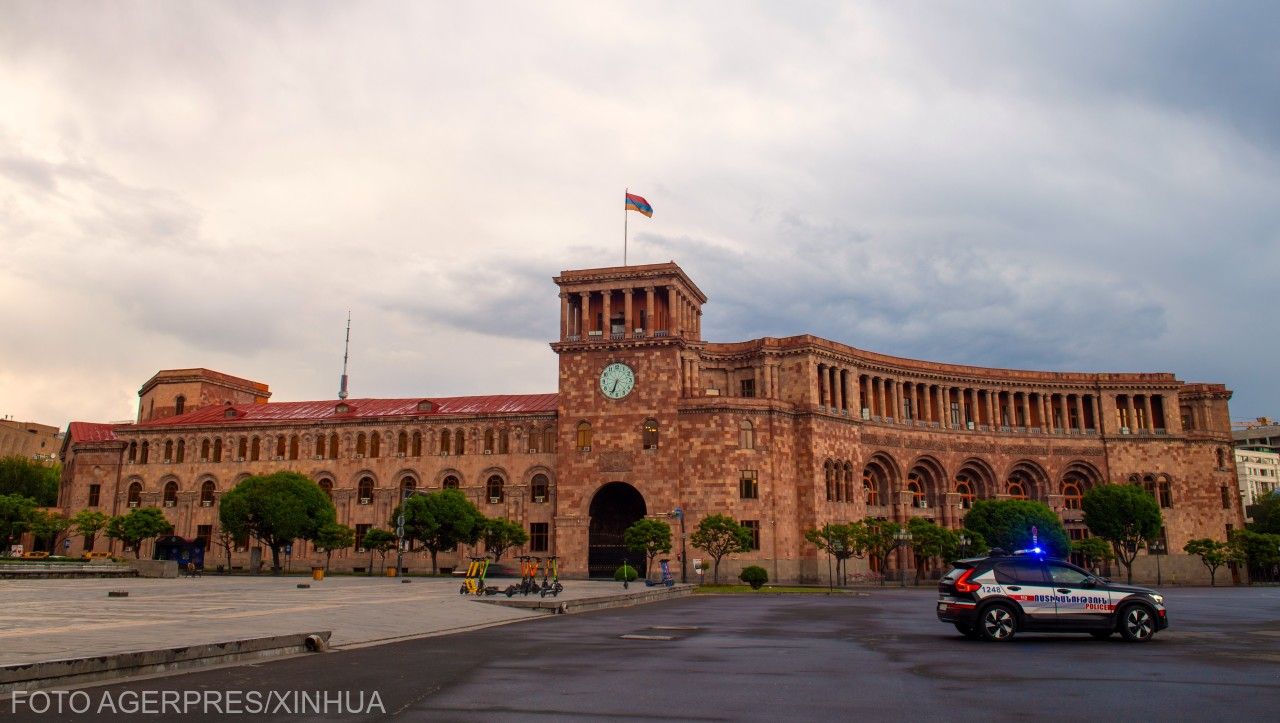
(PHOTO: AGERPRES FOTO / XINHUA)